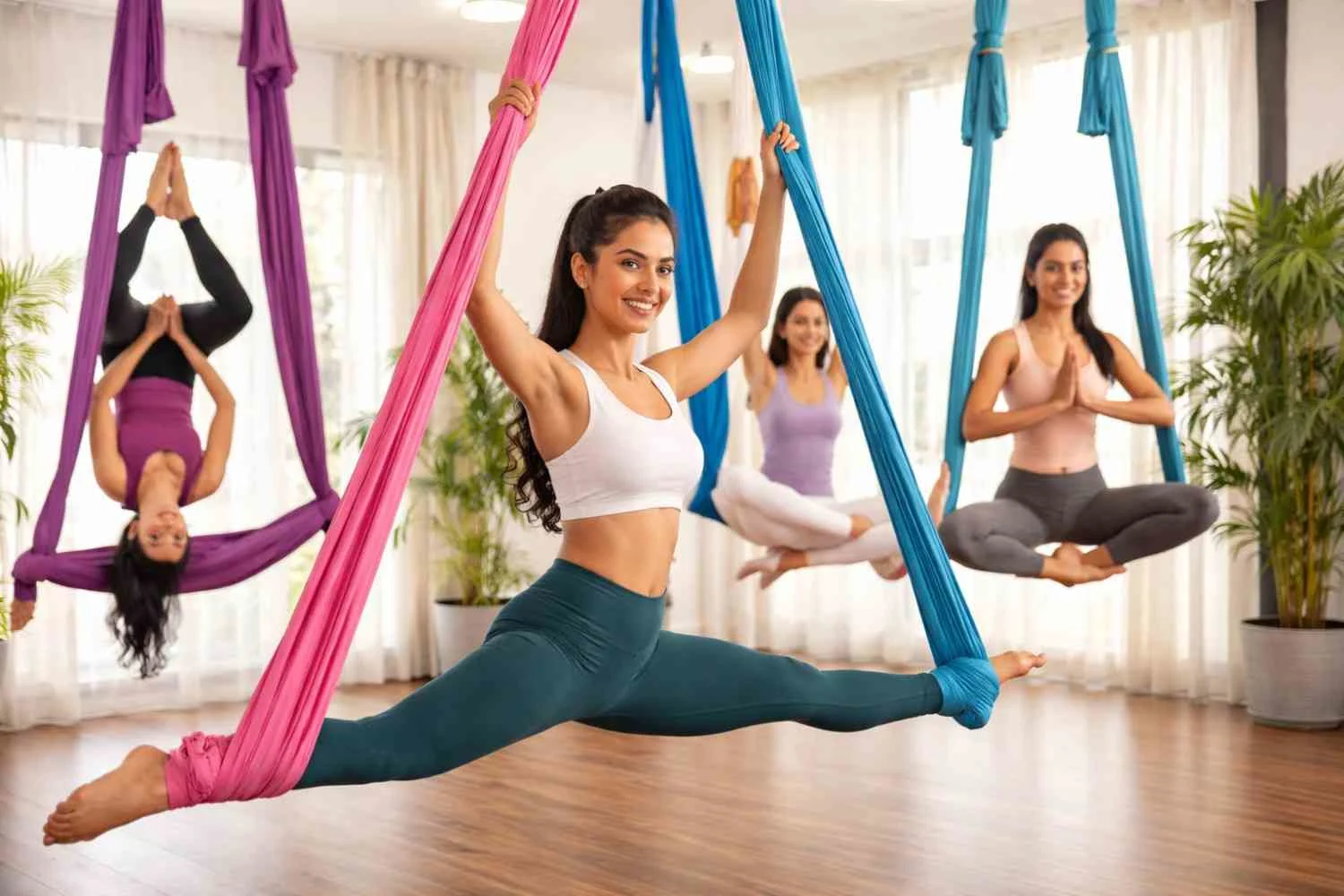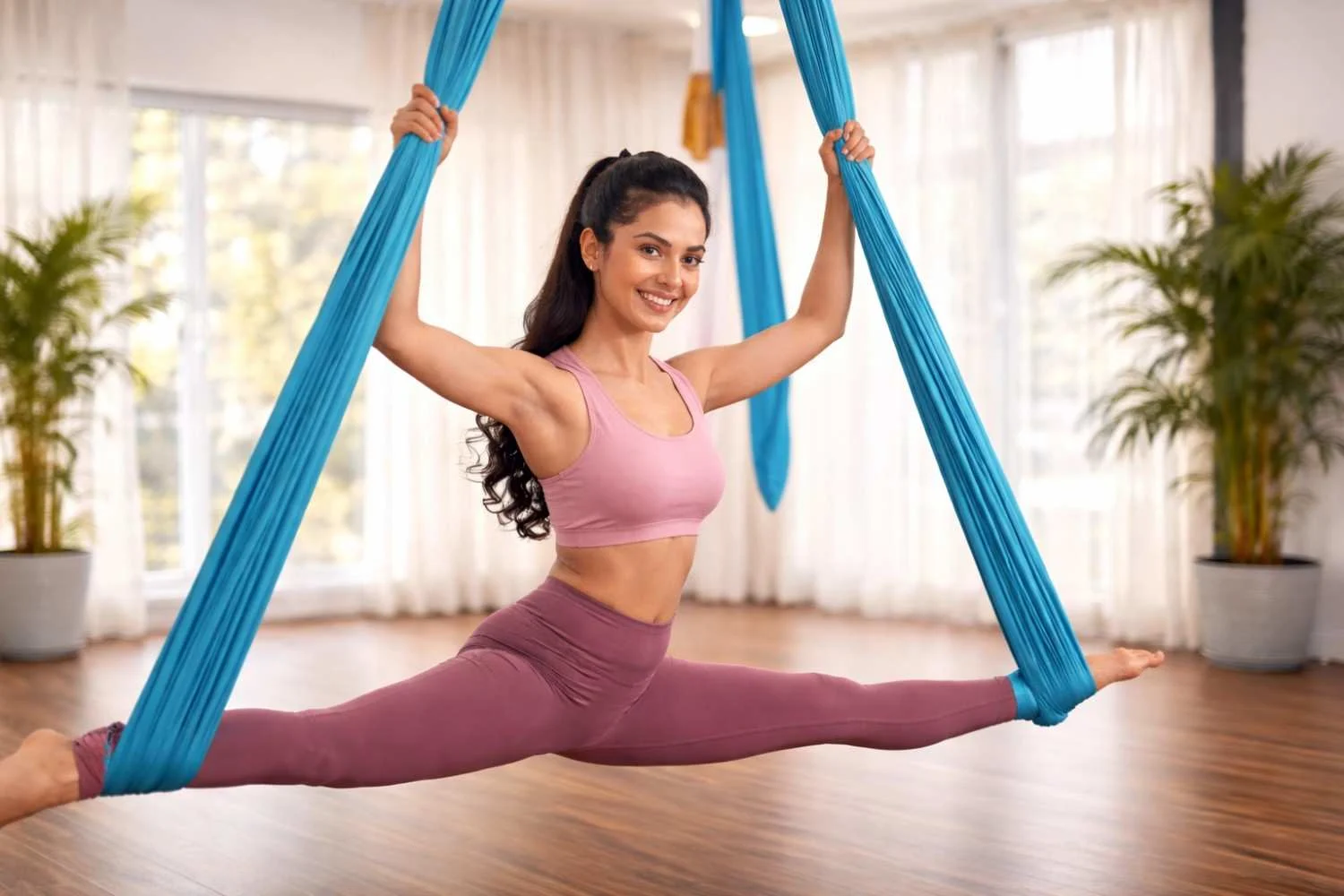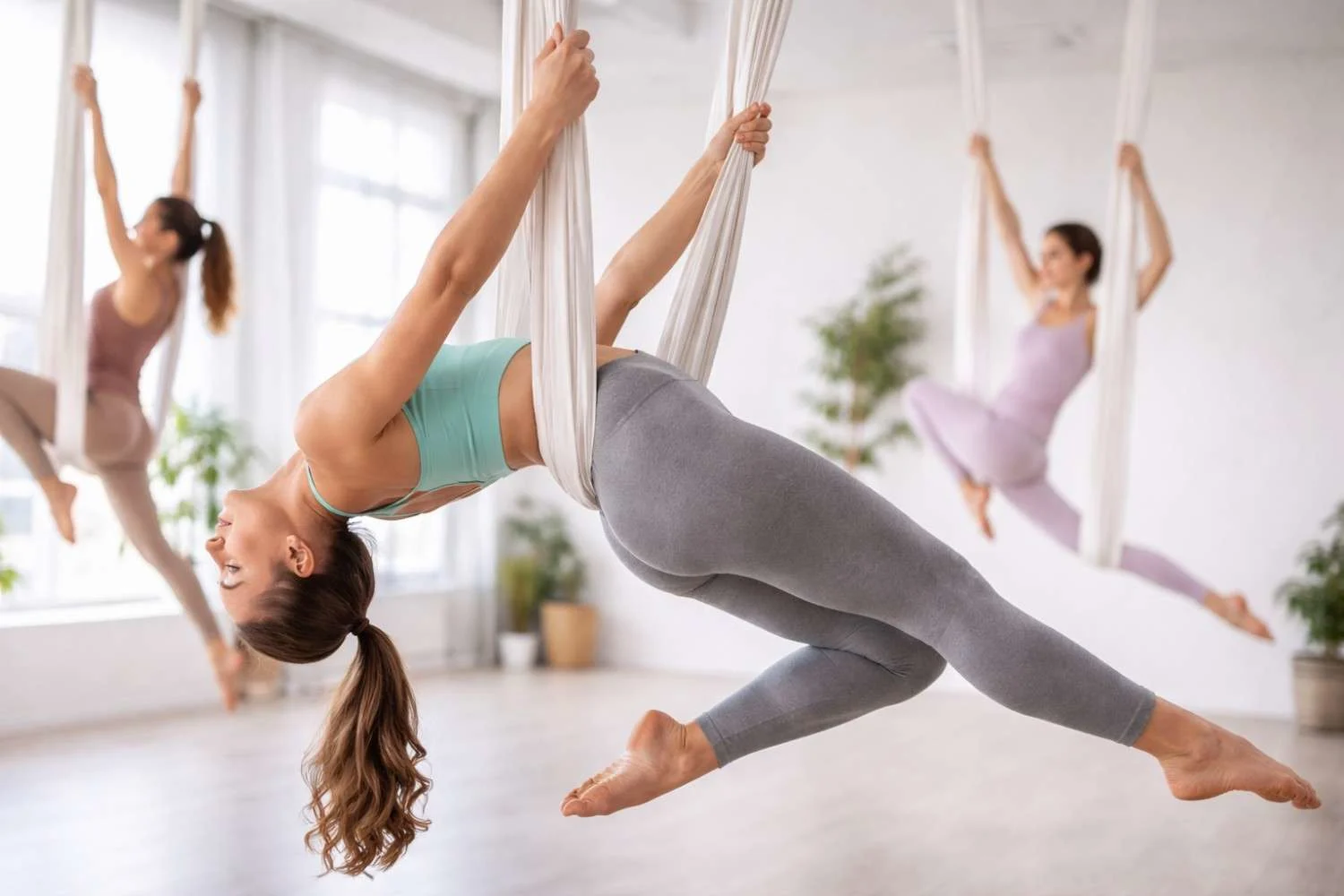
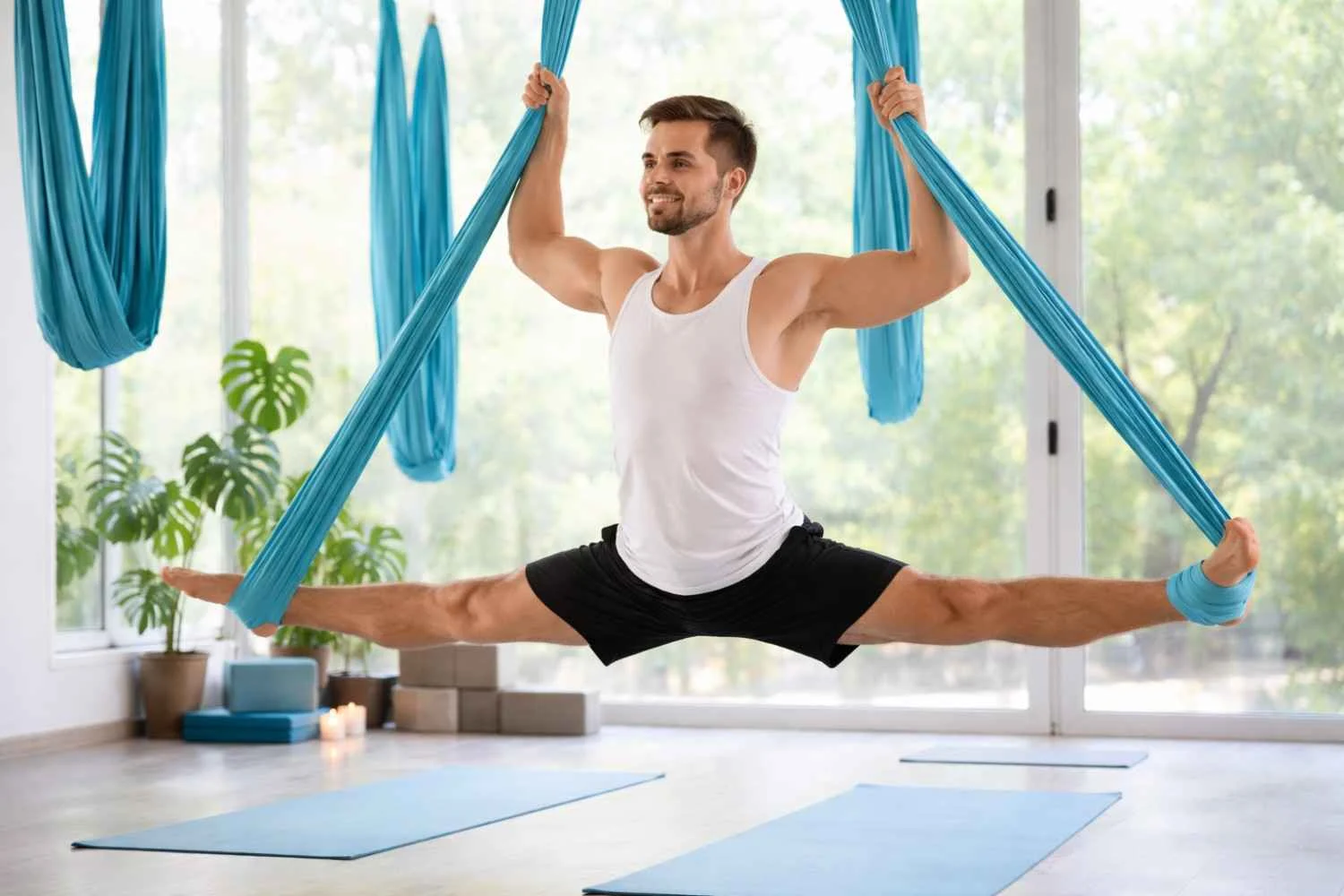
Aerial yoga poses combine traditional yoga movements with the support of a suspended hammock, making it easier to improve flexibility, strength, and balance. Whether you are a beginner or an intermediate practitioner, learning the right aerial yoga poses helps you practice safely and effectively.
If you're new, explore structured aerial yoga sessions to learn poses with proper guidance.
Aerial yoga poses combine traditional yoga movements with the support of a suspended hammock, making it easier to improve flexibility, strength, and balance. Whether you are a beginner or an intermediate practitioner, learning the right aerial yoga poses helps you practice safely and effectively.
If you're new, explore structured aerial yoga sessions to learn poses with proper guidance.
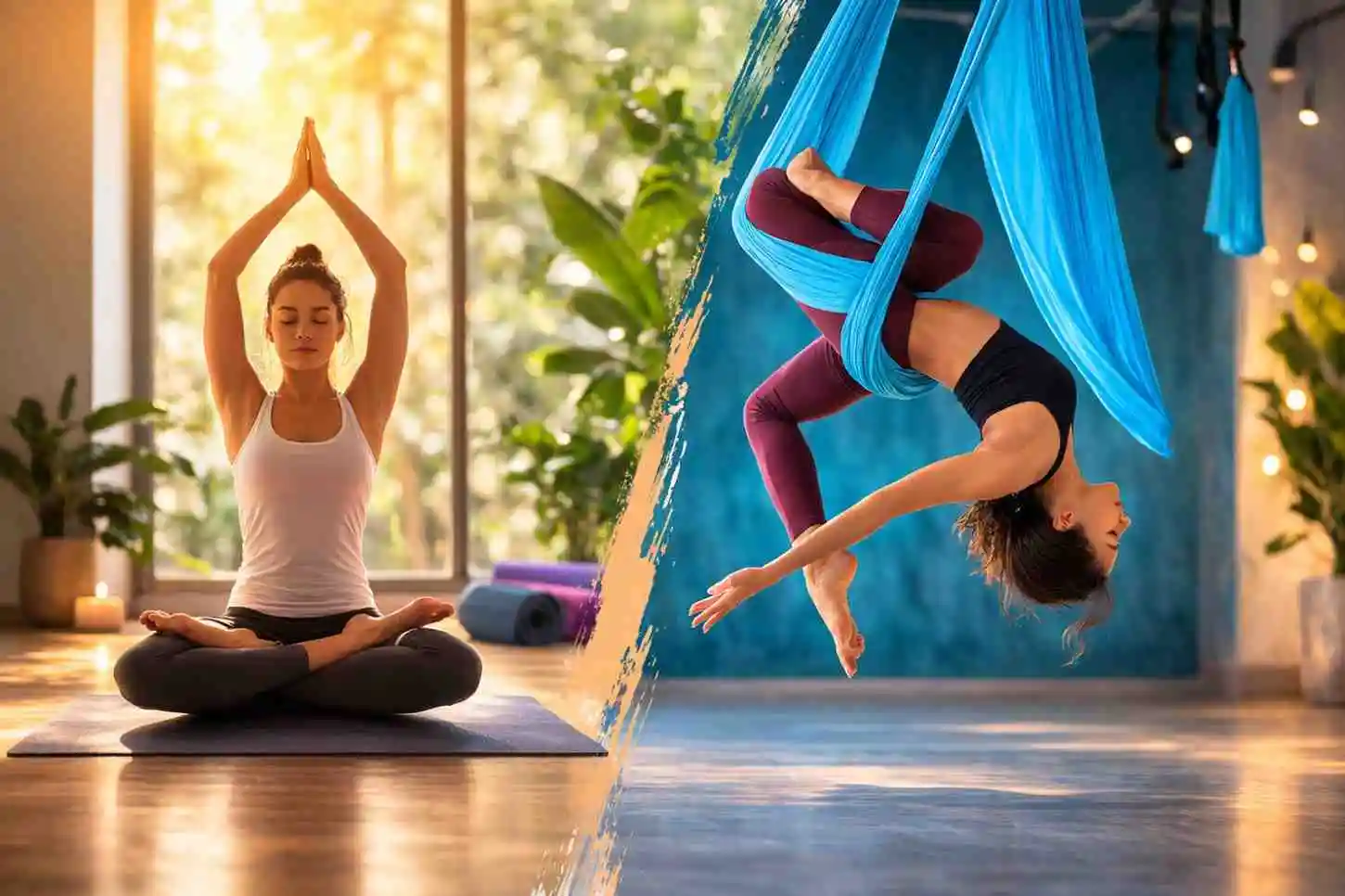
Aerial yoga poses, also known as anti-gravity yoga poses, are performed using a soft fabric hammock suspended from the ceiling. This hammock supports your body weight, allowing you to perform stretches, inversions, and strength-based poses with reduced pressure on joints and spine.
Unlike traditional yoga, aerial yoga enables:
● Deeper stretches without strain
● Improved balance with support
● Enhanced mobility and flexibility
● Safe exploration of inversions
Learn more about what is aerial yoga
Starting with beginner-friendly poses is essential for building confidence, strength, and familiarity with the hammock.
This is the foundational pose in aerial yoga.
How it helps:
● Improves posture and alignment
● Builds awareness of body positioning
● Enhances balance
Beginners should start with guided aerial yoga for beginners sessions to ensure safety.
A gentle pose that stretches the back and hamstrings.
Benefits:
● Releases tension in the lower back
● Improves flexibility
● Calms the nervous system
A supported squat using the hammock.
Benefits:
● Strengthens thighs and glutes
● Improves posture
● Enhances stability
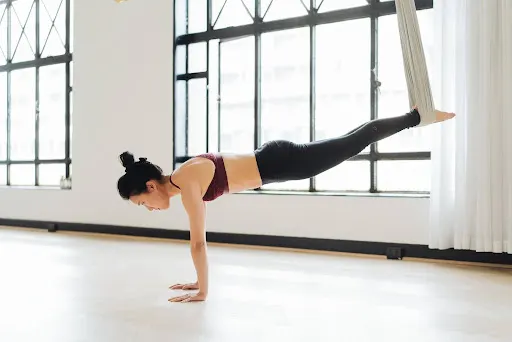
A powerful core-strengthening pose.
Benefits:
● Builds core strength
● Improves stability and endurance
● Enhances body control
Beginners should start with guided aerial yoga for beginners sessions to ensure safety.
Once you gain confidence and strength, you can progress to intermediate-level poses.
One of the most popular aerial yoga poses.
Benefits:
● Relieves spinal pressure
● Improves blood circulation
● Boosts energy levels
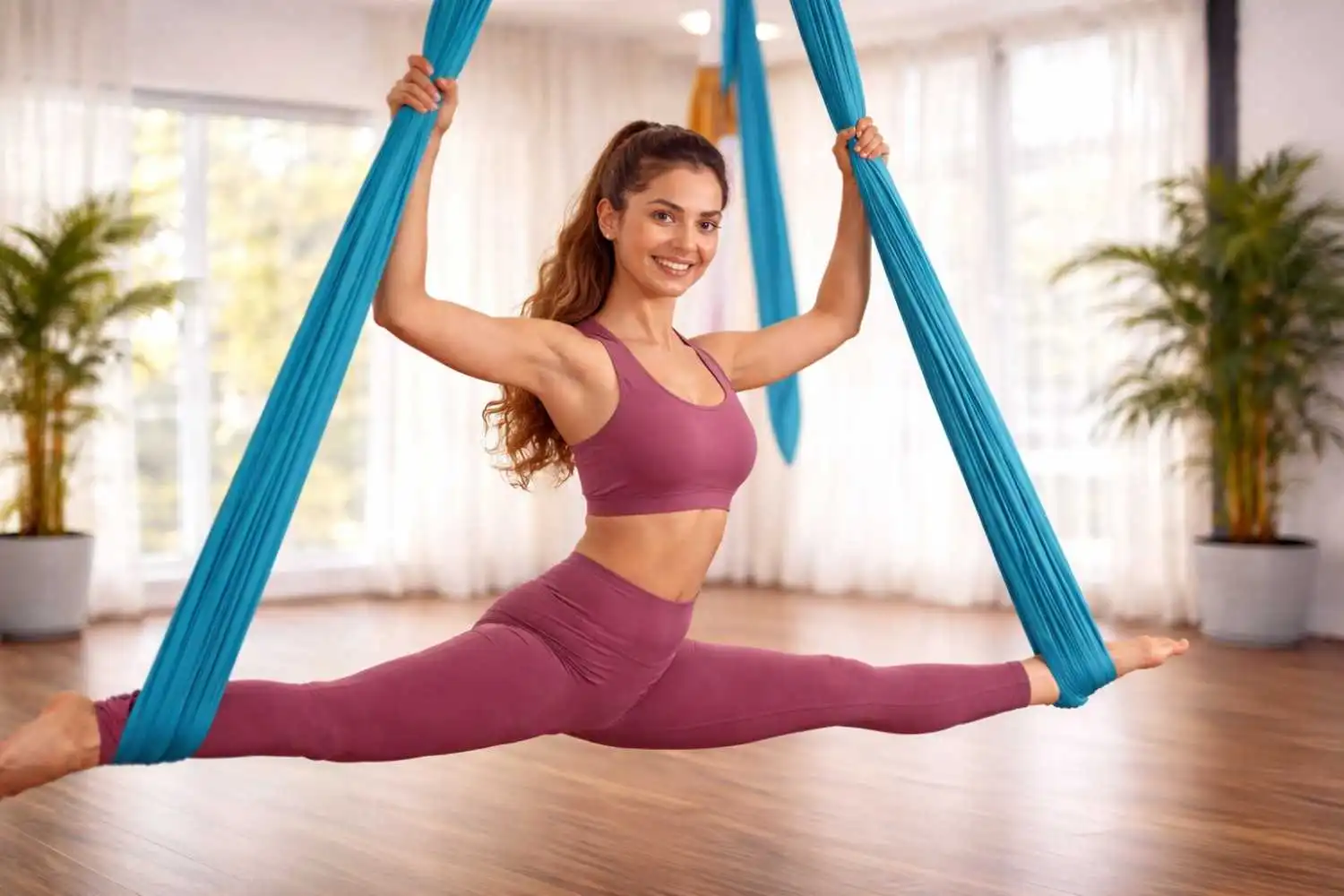
A flexibility-focused pose.
Benefits:
● Enhances flexibility
● Strengthens leg muscles
● Improves coordination
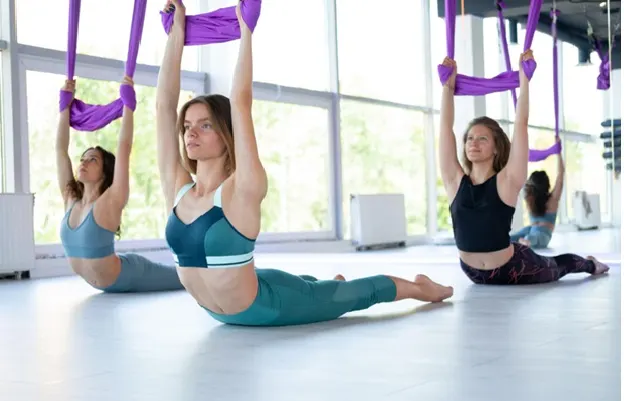
A deep stretch for the spine and chest.
Benefits:
● Opens chest and shoulders
● Improves spinal mobility
● Enhances posture
A relaxing and restorative pose.
Benefits:
● Reduces stress and anxiety
● Promotes deep relaxation
● Improves mental clarity
These poses should be practiced under supervision in aerial yoga classes.
Aerial yoga is not just visually appealing—it offers powerful physical and mental benefits.
● Improves flexibility faster than traditional yoga
● Builds core and upper body strength
● Enhances posture and alignment
● Supports spinal decompression
● Reduces stress and anxiety
● Improves focus and mindfulness
● Boosts mood and energy
● Helps in hormonal balance
● Supports pelvic strength
● Aids physiotherapy recovery
● Reduces back pain
Read more about benefits of aerial yoga
Safety is the most important aspect of aerial yoga.
● Always warm up before starting
● Avoid advanced poses without guidance
● Use high-quality hammock equipment
● Follow instructor instructions carefully
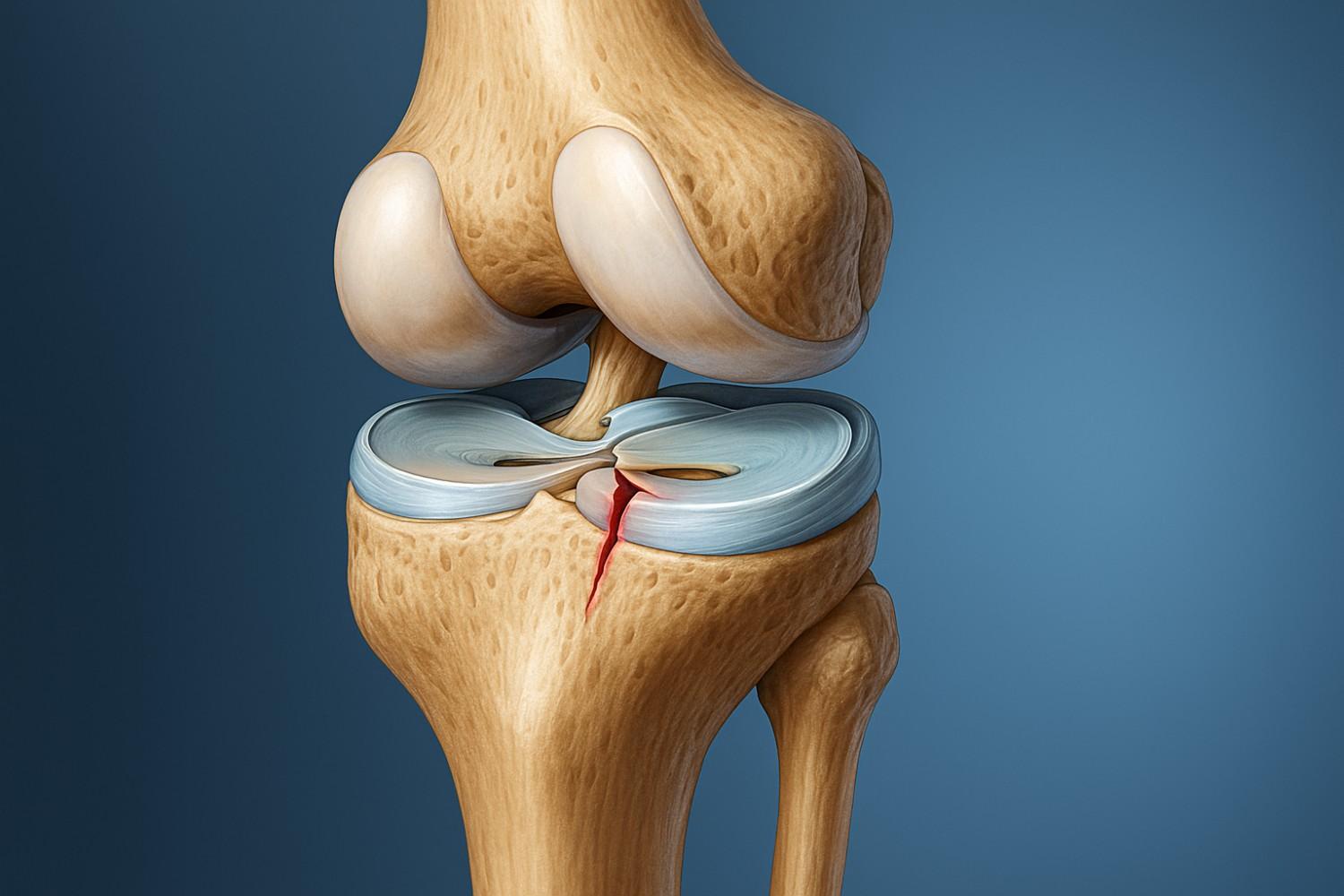
● Inform your trainer about injuries
● Pregnant women
● Individuals with back injuries
● People with high blood pressure
Check is aerial yoga safe before starting
Choosing the right poses depends on your fitness level and goals.
● Start with basic poses
● Focus on balance and comfort
● Avoid inversions initially
● Gradually add inversions and flexibility poses
● Focus on strength and control
● Improve transitions between poses
● Practice consistently
● Focus on proper form
● Progress slowly
Practice consistently. To learn safely, join guided aerial yoga sessions.
Many beginners make simple mistakes that can slow progress or cause discomfort.
Always prepare your body to avoid injuries.
Progress gradually to build strength safely.
Incorrect positioning can reduce effectiveness and increase risk.
Breathing is essential for balance and relaxation.
While it may seem tempting, beginners should avoid practicing aerial yoga at home without supervision.
● Requires proper ceiling installation
● Needs safety-tested equipment
● Incorrect technique can cause injuries
Once trained, you can practice basic poses at home with professional setup.
Here’s a simple routine:
Warm-up (5–10 minutes)
Aerial Mountain Pose
Aerial Forward Fold
Aerial Chair Pose
Aerial Plank
Cool-down in Cocoon Pose
This routine builds strength, flexibility, and confidence gradually.
Aerial yoga is a beautiful blend of fitness, flexibility, and mindfulness. Whether you’re a beginner exploring your first pose or an intermediate practitioner aiming for advanced techniques, the key lies in consistency, safety, and proper guidance.
With the right approach, aerial yoga can transform not just your body—but your overall well-being.
Copyright 2026 | Omansh.org
Website designed and developed by PulsePlay Digital