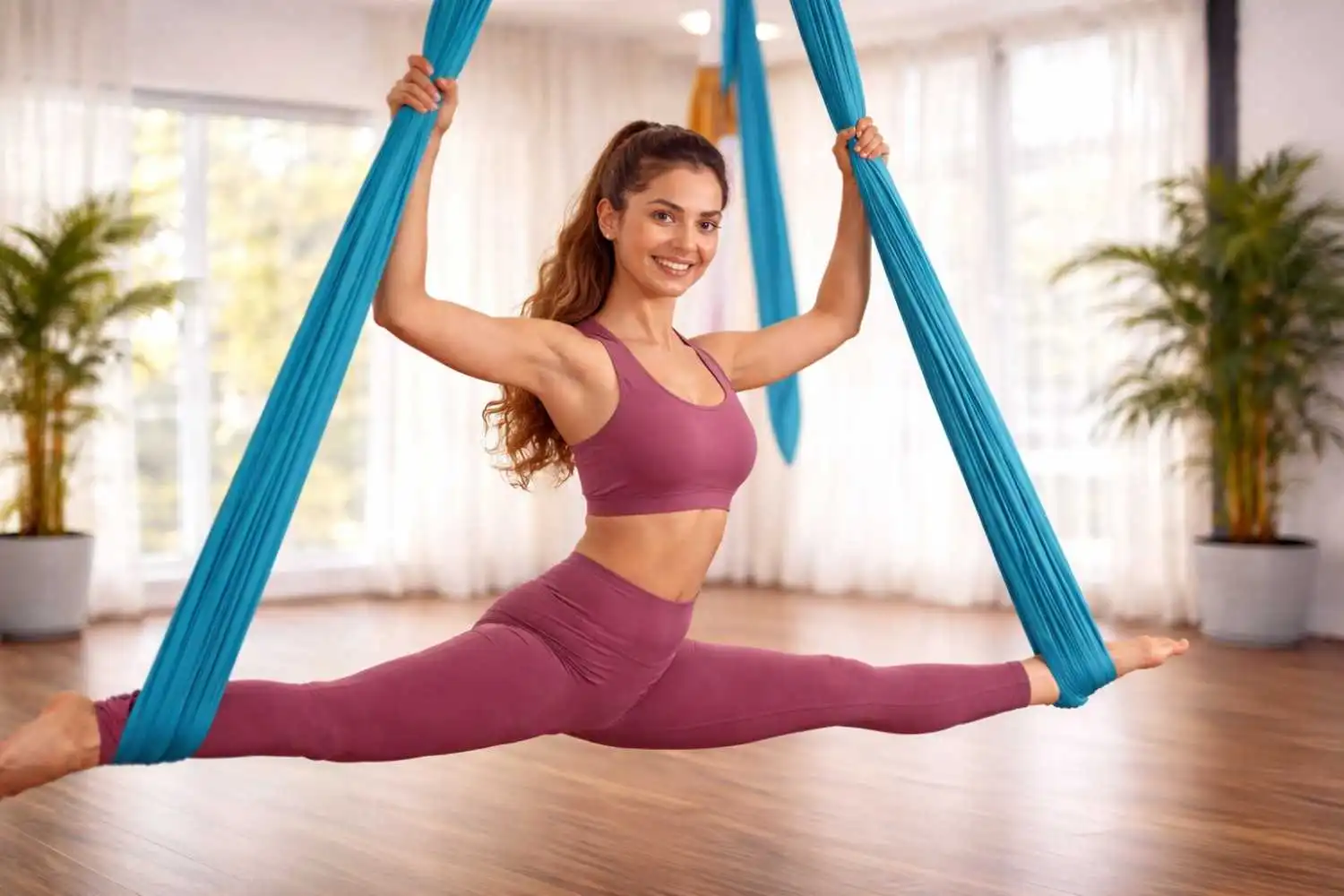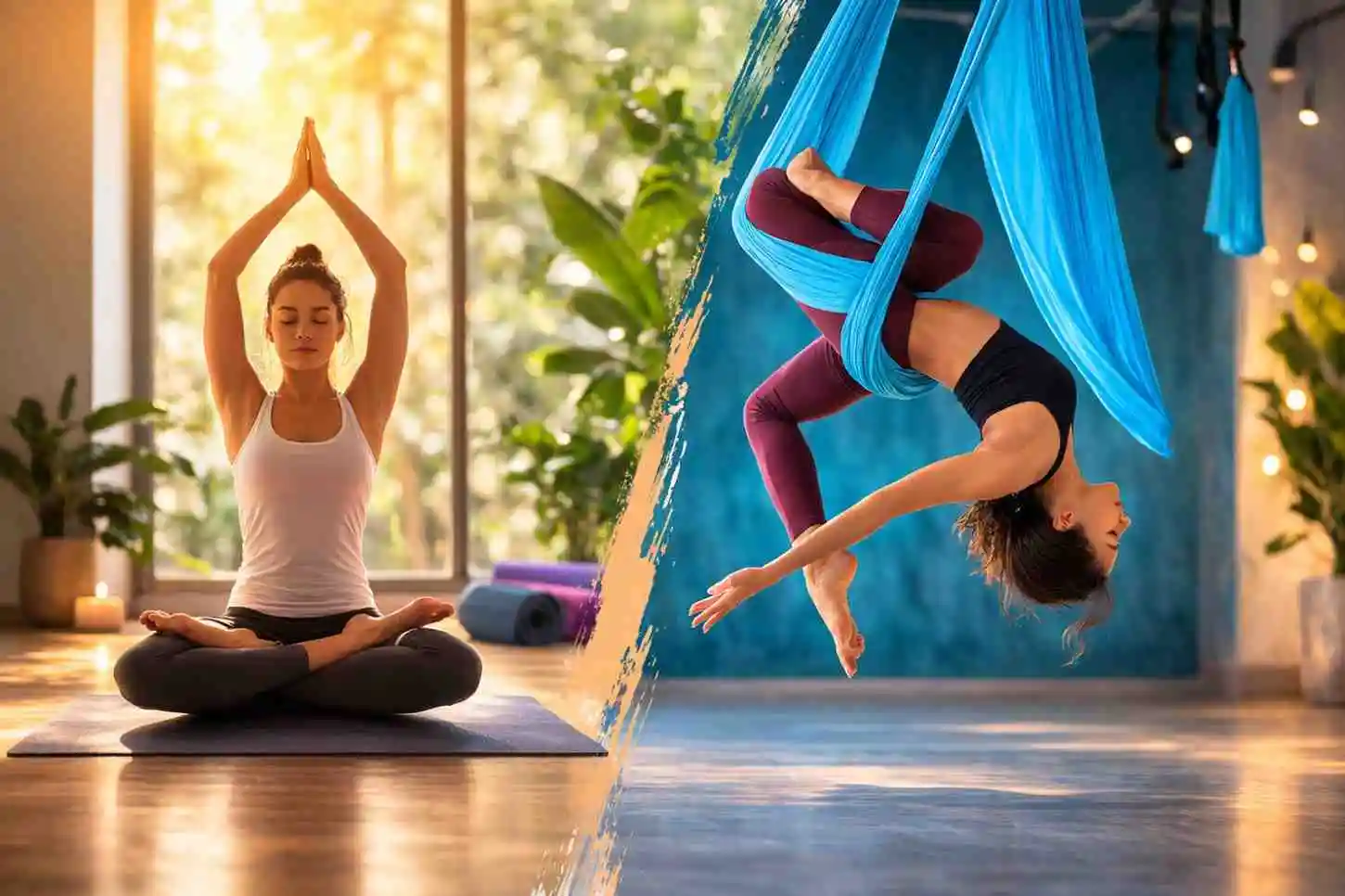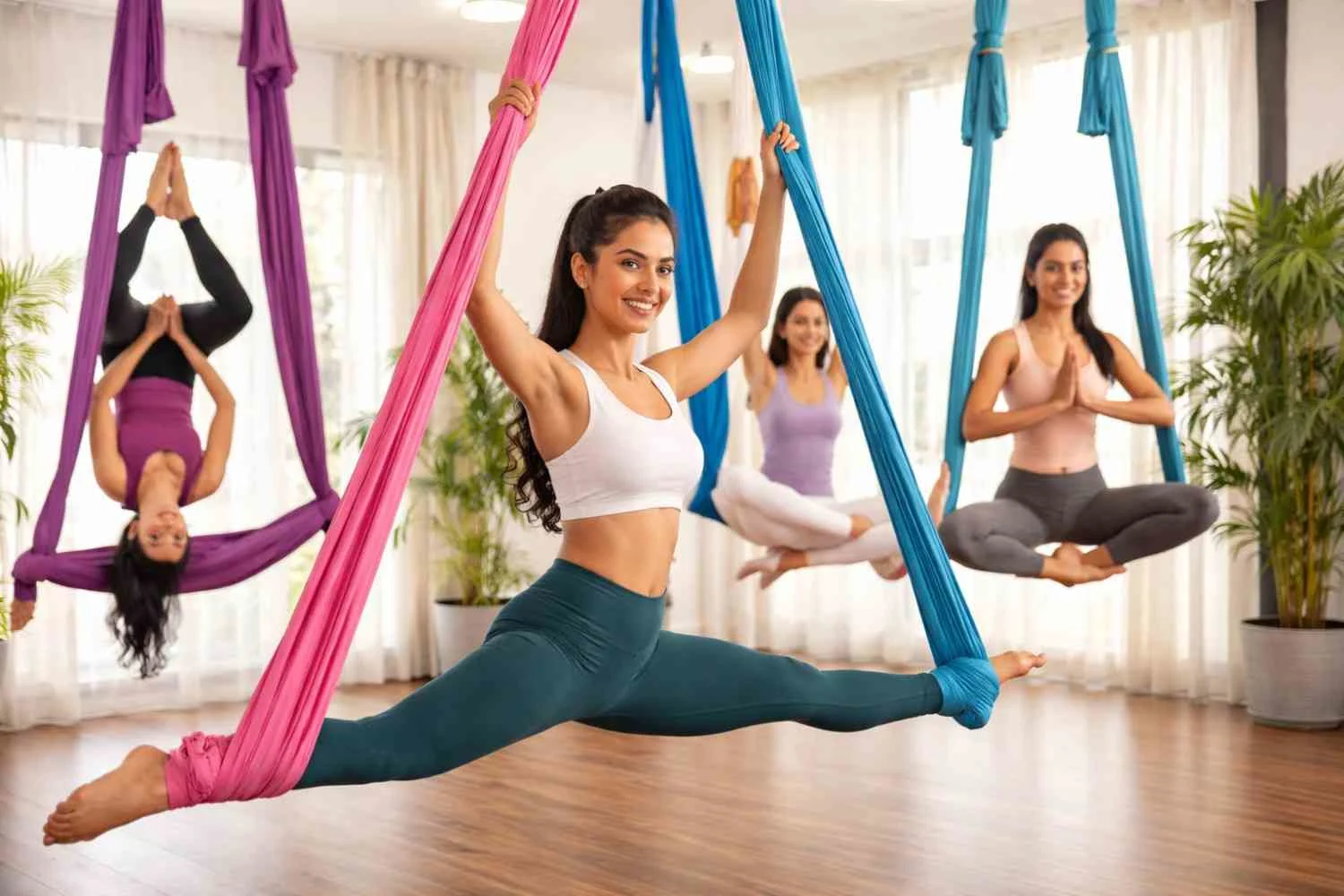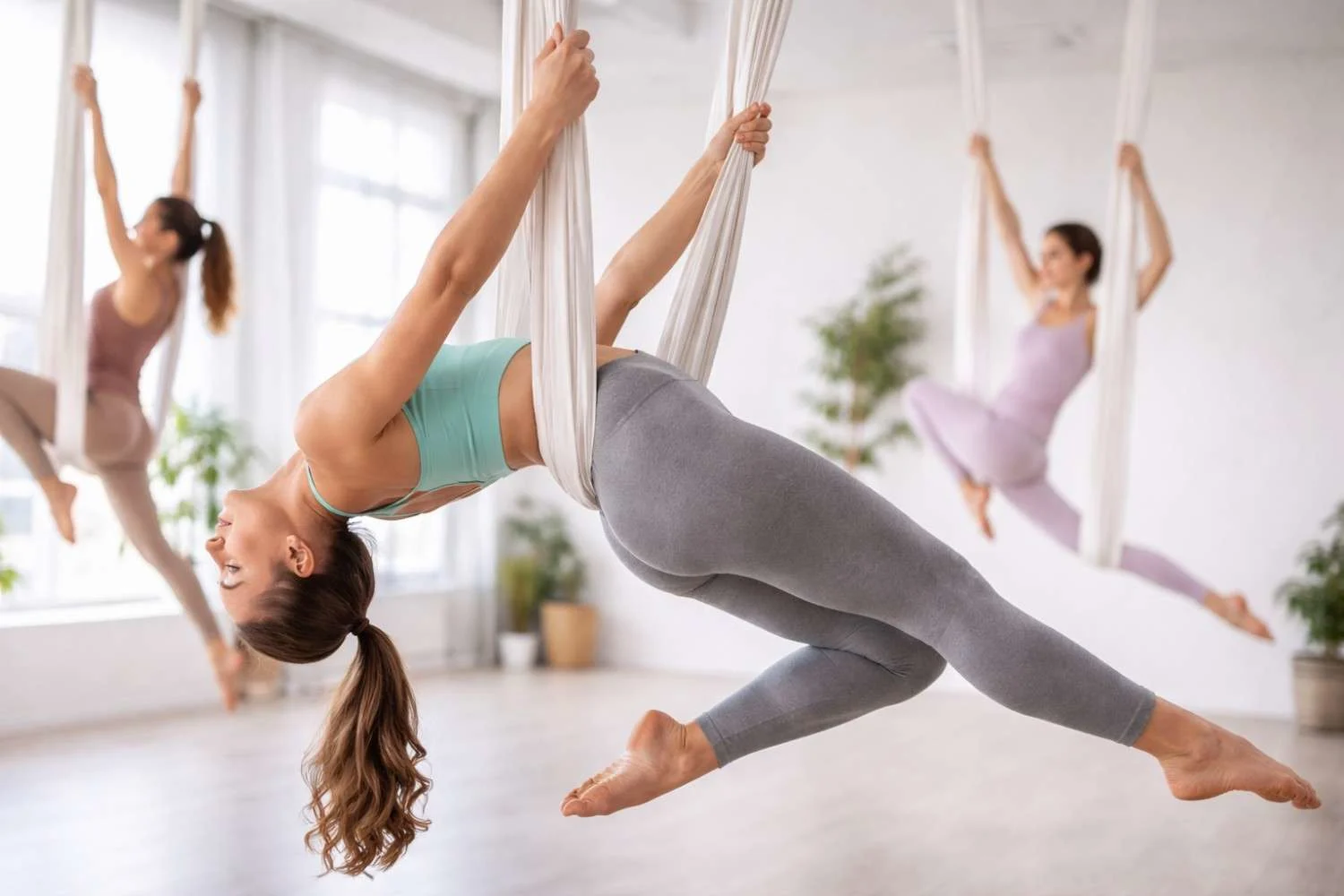
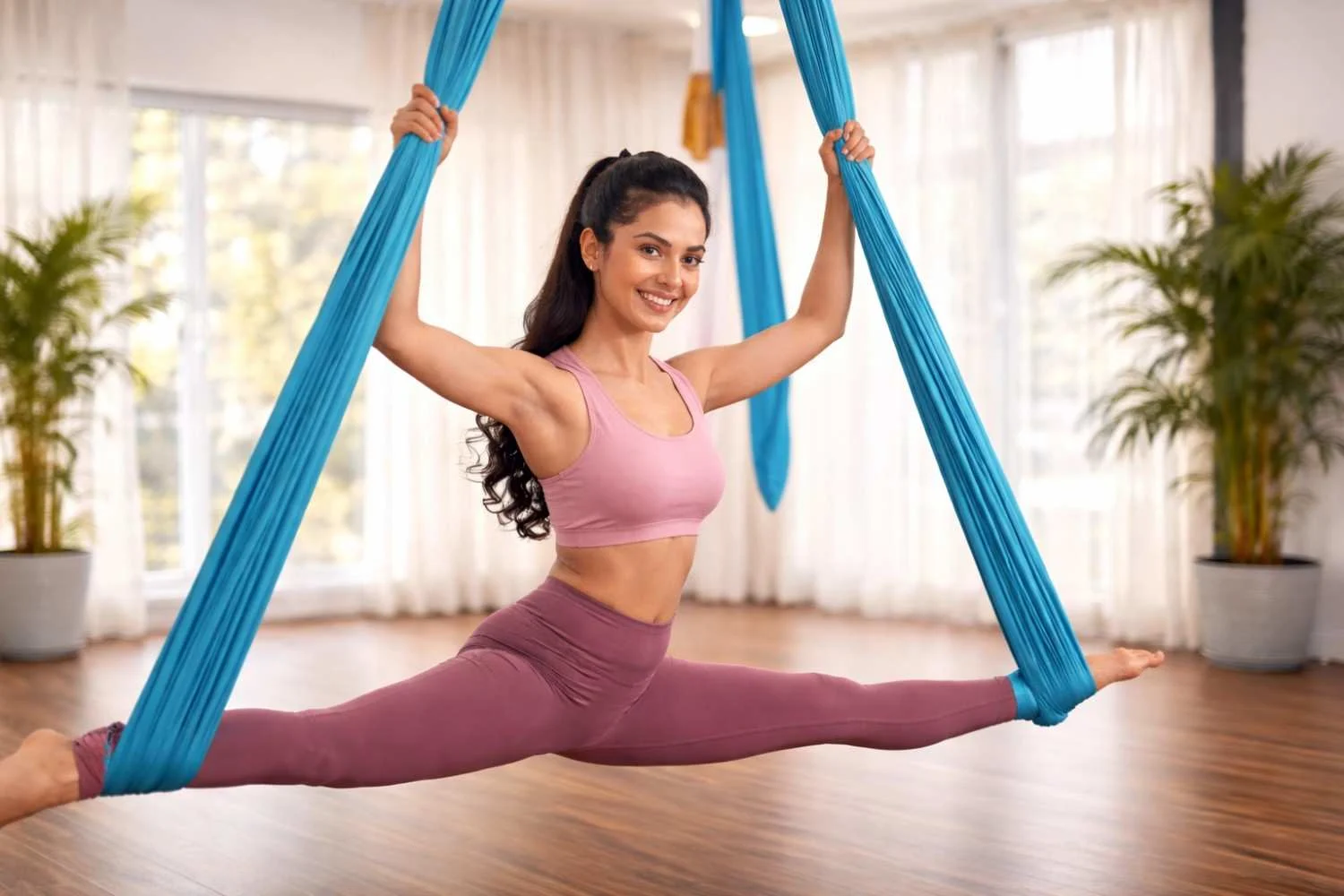
If you’ve ever been curious about hanging in a yoga hammock but felt unsure where to start, this guide is for you. Aerial yoga for beginners is safe, accessible, and surprisingly supportive when practiced with proper guidance. The hammock reduces pressure on joints while helping you balance and stretch comfortably. In this guide, you’ll learn whether aerial yoga is right for you, what to expect in your first class, safety tips, and how to begin confidently.
Aerial yoga can be an empowering and enjoyable experience for women seeking a low-impact workout, physiotherapy patients rebuilding strength, or yoga enthusiasts wanting to try something new.
Yes, aerial yoga is suitable for beginners when it is practiced under the supervision of a trained instructor. Classes are designed with gradual progression, allowing newcomers to learn foundational poses safely. With proper guidance and support from the hammock, even those without prior yoga experience can begin confidently. Explore guided aerial yoga sessions tailored for all levels.
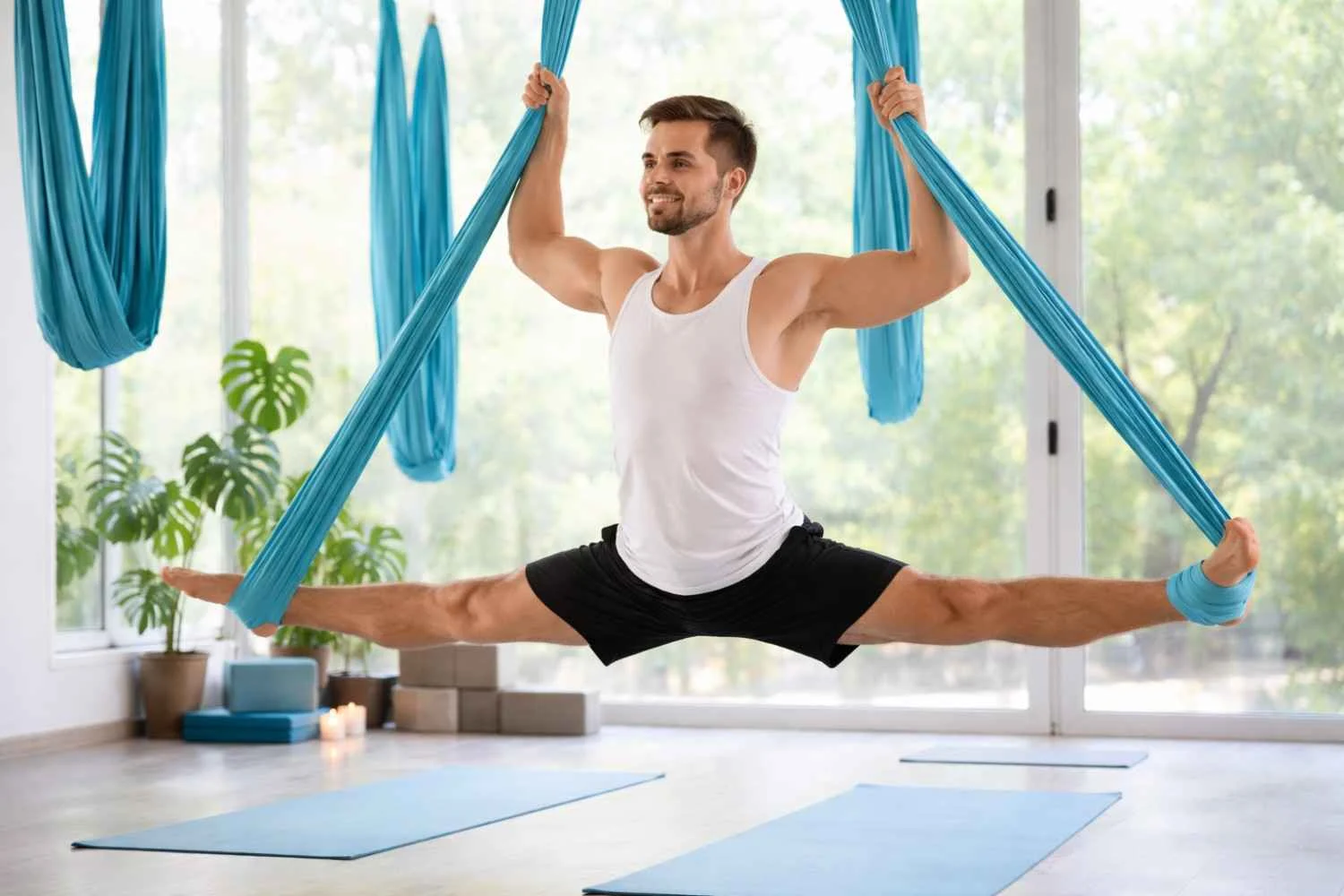
The most reassuring part of aerial yoga for beginners is the hammock itself. The soft fabric supports your body weight, reducing strain on muscles and joints.
It assists balance during standing or suspended poses and helps you feel secure while learning new movements. Unlike floor-based yoga, where you rely entirely on strength and flexibility, the hammock acts as a partner in your practice.
Traditional exercises can sometimes put pressure on knees, wrists, and ankles. Aerial yoga distributes body weight more evenly through the hammock, making it gentler on sensitive joints.
For beginners who may experience mild knee discomfort or wrist sensitivity, the low-impact nature of aerial yoga makes it more accessible than high-intensity workouts.
Aerial yoga for beginners is not about performing advanced acrobatics. Instructors offer modifications for every pose.
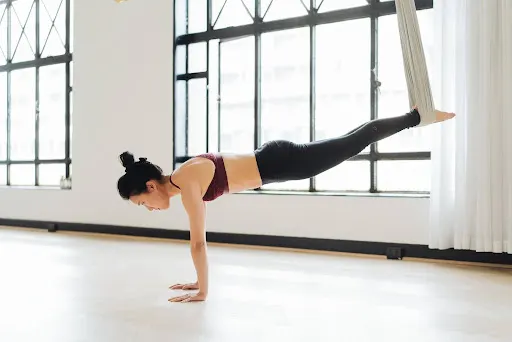
You can keep one foot on the ground for stability or use partial weight support instead of fully suspending. As your strength and comfort grow, you can gradually increase intensity.
Supported inversions are introduced step-by-step. The hammock holds your hips securely, allowing you to experience being upside down without fear.
This gradual exposure builds confidence, improves coordination, and helps overcome mental barriers at your pace.
Starting something new can feel intimidating. Here’s a breakdown of what usually happens in your first class.
Your instructor will first explain how the hammock works. You’ll learn:
β How to sit safely in the fabric
β Proper hand grips
β How to balance with partial weight support
This orientation helps you feel comfortable before moving into poses.
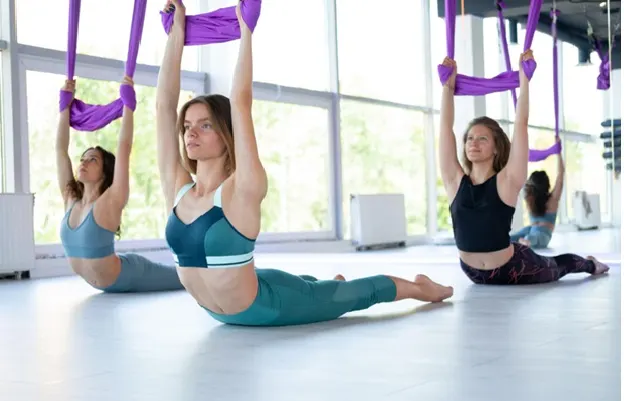
Beginners start with foundational movements such as supported lunges, seated stretches, and gentle backbends.
These poses help you understand how the hammock responds to your body weight. The focus remains on alignment and breathing rather than complexity.
Before attempting any suspended movements, instructors provide a safety overview.
You’ll learn about:
β Equipment setup and weight limits
β Safe mounting and dismounting techniques
β Demonstrations of each posture
Reputable studios offering structured aerial yoga classes ensure every beginner receives thorough instruction.
Inversions are optional in beginner classes. If included, they are assisted and controlled.
The hammock supports your hips while your head lowers toward the floor, allowing gentle spinal decompression without strain.
Classes typically end with relaxation inside the hammock.
You may experience:
β Gentle rocking movements
β Deep breathing exercises
β Light stretching
This soothing conclusion calms the nervous system and leaves you feeling refreshed.
Safety is essential in aerial yoga for beginners. Following simple precautions ensures a positive experience.
Always begin under professional supervision. Certified instructors understand proper alignment, spotting techniques, and safety adjustments.
Unsupervised attempts at home increase the risk of improper setup or strain.
Eating a heavy meal before class can cause discomfort during inversions.
It’s best to practice 2–3 hours after eating for optimal comfort.
Choose fitted, stretchable clothing that covers the backs of your knees and underarms.
Avoid zippers, jewelry, or sharp accessories that could damage the fabric.
If you have back pain, neck issues, high blood pressure, or recent injuries, inform your instructor beforehand.
They can modify poses or recommend alternatives for safety.
Avoid pushing yourself into advanced poses too quickly.
Focus on mastering foundational movements and listening to your body. For deeper insights, read our guide on Is aerial yoga safe? to understand precautions in detail.
While aerial yoga is safe for most beginners, some individuals should consult a healthcare provider before starting.

Avoid aerial yoga if you have:
β Pregnancy (unless medically cleared and in specialized prenatal classes)
β Recent surgeries
β Severe vertigo
β Uncontrolled high blood pressure
β Serious spinal injuries
Medical clearance ensures safe participation.
Even as a beginner, you’ll start noticing benefits within weeks.
β Improves flexibility safely: Gravity-assisted stretching allows deeper range of motion without strain.
β Builds basic strength: Core, arms, and legs engage throughout the practice.
β Reduces fear of inversions: Supported hanging builds comfort and trust.
β Improves posture: Spine alignment and shoulder opening counteract desk posture.
β Boosts confidence: Learning new movements creates empowerment and self-belief.
For women balancing work, family, and wellness, aerial yoga offers a refreshing, confidence-building activity.
For beginners, 1–2 sessions per week are ideal.
This frequency allows your body time to adapt while building strength gradually. Focus on technique and breath control rather than intensity.
After 4–6 weeks, you can increase frequency based on comfort and recovery. Consistency matters more than speed of progression.
It may feel intimidating initially, but supported inversions are gentle and controlled. Most beginners quickly realize it’s more fun than frightening.
When equipment is properly secured and instructions are followed, falling is extremely rare. The hammock is designed to hold significant weight safely.
No. Flexibility develops over time. Aerial yoga for beginners is designed to improve mobility gradually.
Not necessarily. In some cases, the hammock actually makes poses easier by providing support. It simply feels different—not harder.
Aerial yoga for beginners is not about extreme flexibility or acrobatics—it’s about supported movement, gradual strength-building, and confidence development. With proper guidance, safe progression, and consistency, you can enjoy a unique yoga experience that enhances both physical and mental well-being.
If you’re ready to begin, take the first step with structured guidance and discover how empowering it feels to move with the support of the air beneath you.
Copyright 2026 | Omansh.org
Website designed and developed byΒ PulsePlay Digital