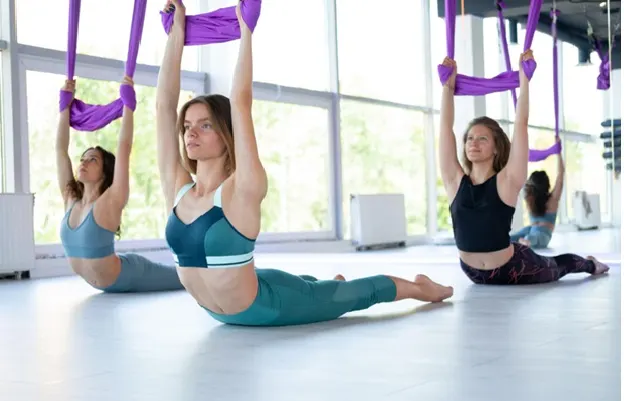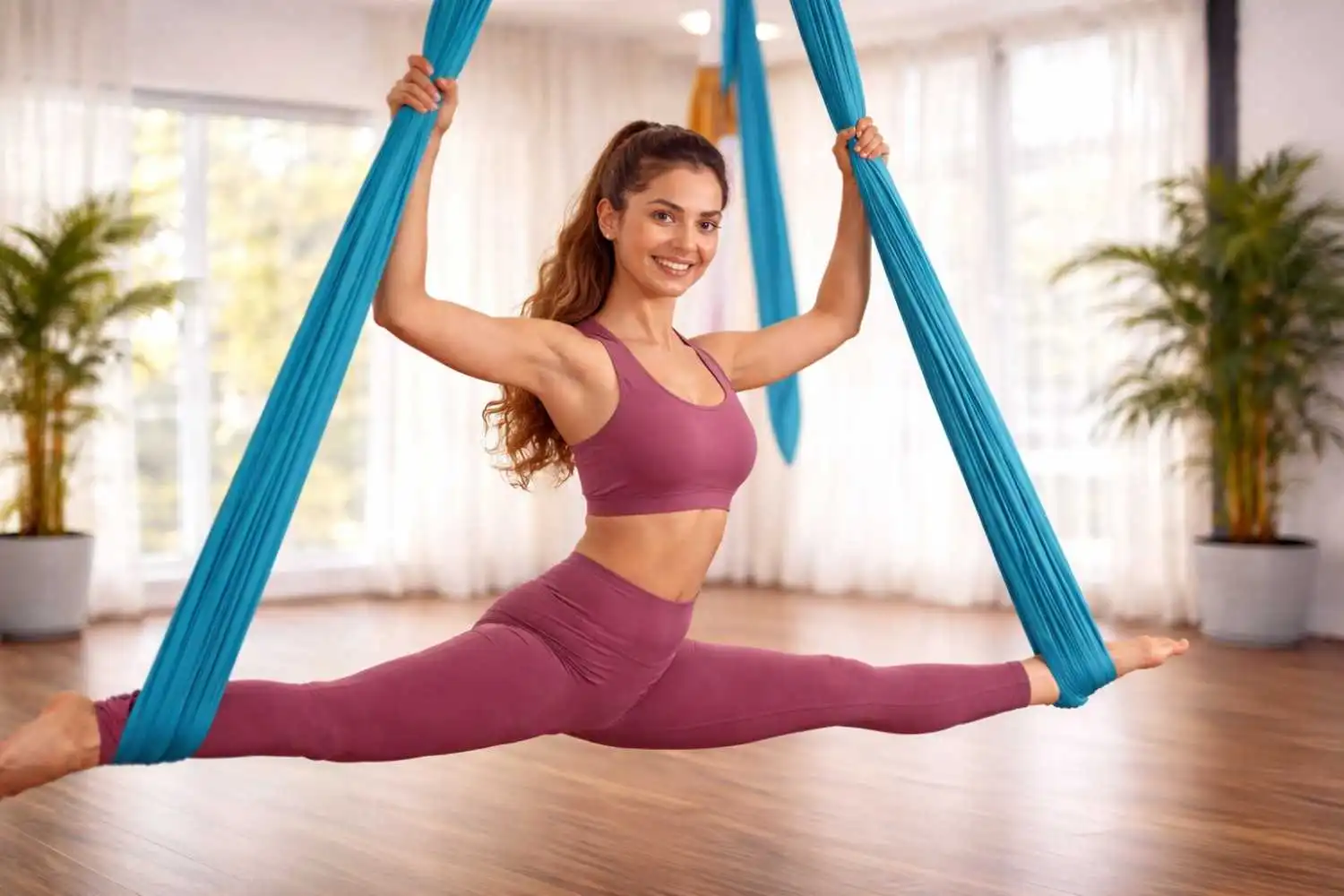
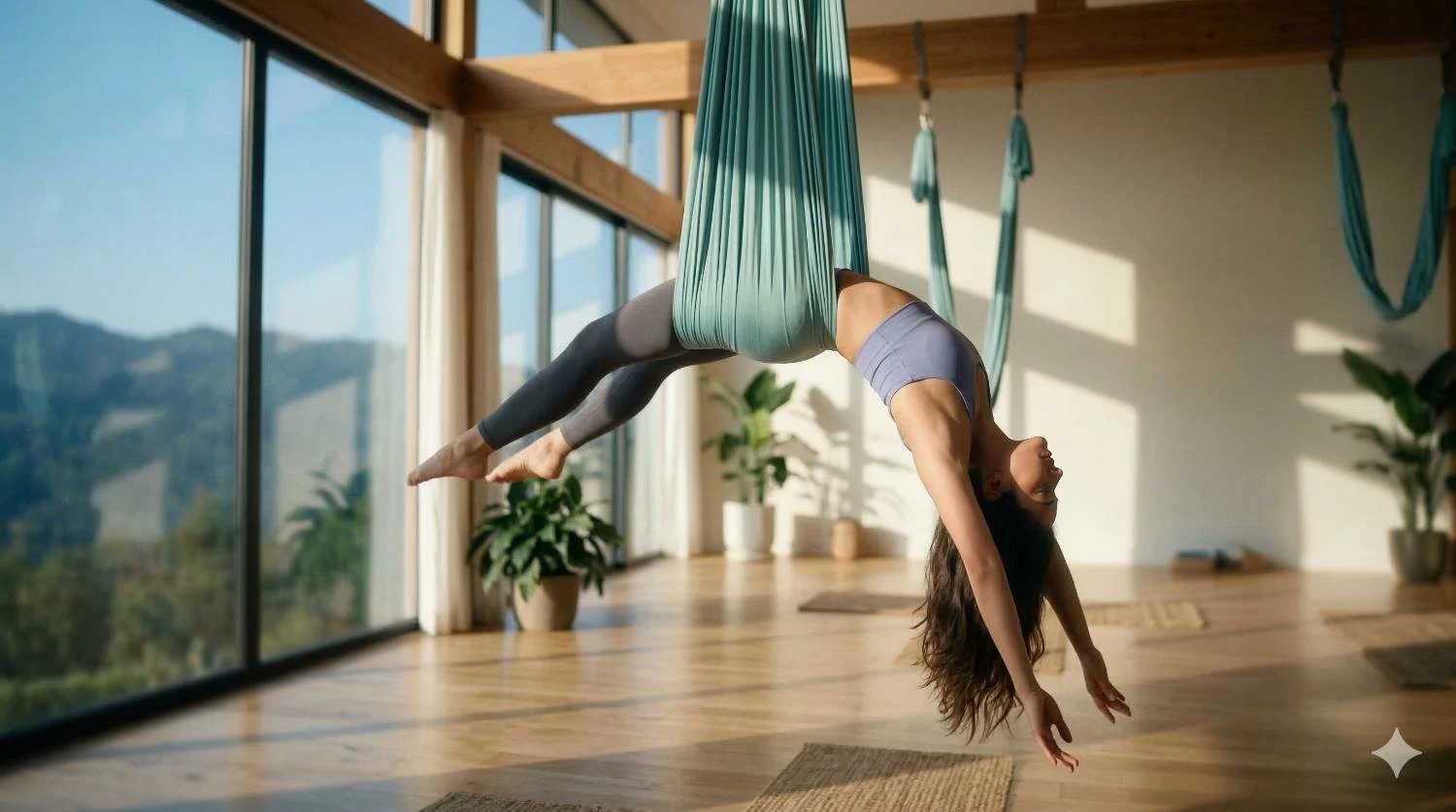
Aerial yoga for back pain is a yoga practice that uses a suspended hammock to support the body during stretches and poses. The hammock reduces pressure on the spine, allowing gentle spinal decompression, improved posture, and increased flexibility. This support may help relieve certain types of back pain and reduce muscle tension.
Aerial yoga is a modern yoga practice that combines traditional yoga poses with the support of a suspended hammock or aerial silk. The hammock hangs from the ceiling and partially supports the body, allowing practitioners to perform stretches, balance poses, and inversions with less pressure on the joints and spine.
Unlike traditional mat-based yoga, aerial yoga allows practitioners to move freely in multiple directions while being supported by the fabric. This support enables deeper stretches and improved alignment, making it especially helpful for people who experience stiffness or tension in their back.
Many people explore aerial yoga as a supportive yoga practice that allows deeper stretches while reducing strain on joints and the spine. The hammock helps stabilize the body during poses, allowing beginners and individuals with mild discomfort to perform movements safely.
Aerial yoga typically includes a mix of:
● Gentle stretching
● Strength-building poses
● Balance and stability exercises
● Relaxation and breathing techniques
Because the hammock supports body weight, certain poses become easier to perform while also allowing the spine to elongate naturally.
Back pain is one of the most common physical complaints, often caused by poor posture, prolonged sitting, muscle weakness, or stress. Aerial yoga may help relieve certain types of back discomfort by improving spinal alignment, flexibility, and muscle balance.
Below are some key ways aerial yoga may support spinal health.
One of the most significant benefits of aerial yoga for back pain is spinal decompression.
When the body is partially suspended in a hammock, gravity gently pulls the spine downward. This helps create space between the vertebrae and reduces pressure on the spinal discs.
Benefits of spinal decompression may include:
● Reduced pressure on compressed spinal discs
● Improved spinal alignment
● Relief from tightness in the lower back
● Increased mobility in the spine
Traditional yoga inversions can sometimes be challenging, but the hammock allows the body to hang safely, providing controlled decompression without excessive strain.
Poor posture is a major contributor to chronic back pain, especially for people who spend long hours sitting at a desk or using digital devices.
Aerial yoga encourages proper body alignment by strengthening the muscles that support the spine, including the:
● Core muscles
● Lower back muscles
● Shoulders and upper back
When these muscles become stronger, they help stabilize the spine and maintain better posture throughout the day.
Over time, improved posture can reduce strain on the back and help prevent recurring discomfort.
Muscle stiffness is another common cause of back pain. Tight hamstrings, hip flexors, and lower back muscles can restrict movement and increase stress on the spine.
Aerial yoga allows deeper stretching because the hammock supports body weight and reduces pressure on joints.
Regular stretching during aerial yoga sessions may help:
● Loosen tight back muscles
● Improve spinal mobility
● Increase flexibility in the hips and hamstrings
● Reduce stiffness caused by inactivity
Improved flexibility helps the body move more naturally, reducing the likelihood of strain or injury.
Stress and tension often accumulate in the back, shoulders, and neck. Over time, this tension can lead to discomfort or pain.
Aerial yoga incorporates relaxation poses where the body is supported by the hammock while gently stretching the spine.
These poses encourage:
● Deep breathing
● Muscle relaxation
● Reduced stress levels
When the body relaxes, muscle tightness around the spine may gradually decrease, contributing to better overall comfort.
While aerial yoga is not a medical treatment, it may help people experiencing mild to moderate back discomfort, especially when caused by lifestyle factors.
Some types of back pain that may benefit include:
Lower back stiffness often develops due to prolonged sitting or lack of movement. Aerial yoga for lower back pain can gently stretch the lumbar spine and surrounding muscles.
This stretching helps restore mobility and reduce stiffness.
Postural pain occurs when the spine remains in a poor alignment for extended periods.
Common causes include:
● Desk work
● Smartphone use
● Slouching while sitting
Aerial yoga strengthens postural muscles and encourages proper alignment, which may help reduce postural back pain.
Muscle tightness in the back may occur due to stress, overuse, or insufficient stretching.
Aerial yoga’s supported stretches can help release muscle tension while allowing the spine to relax.
Many people experience back discomfort because of a sedentary lifestyle.
Regular aerial yoga practice encourages movement, stretching, and muscle engagement, helping the body stay more flexible and balanced.
However, individuals with persistent or severe back pain should consult a healthcare professional before starting any new exercise program.
While aerial yoga can be beneficial, safety is essential, especially for people experiencing back pain.
Taking proper precautions helps ensure the practice remains safe and effective.
If your back pain is severe, chronic, or caused by a specific medical condition, it is important to consult a doctor or physiotherapist before trying aerial yoga.
They can help determine whether this practice is appropriate for your condition.
Beginners should start with basic aerial yoga classes that focus on gentle movements and foundational poses.
This helps the body gradually adapt to the new practice without overloading the spine or muscles.
A qualified instructor ensures that:
● The hammock is properly set up
● Poses are performed safely
● Alignment is correct
Proper guidance reduces the risk of injury and ensures that the poses benefit the spine.
Controlled movements are essential during aerial yoga.
Sudden or jerky motions may strain the back or other muscles, especially for beginners.
Aerial yoga should not cause pain. If any movement causes sharp or worsening discomfort, it is best to stop and consult an instructor or healthcare professional.
If you are unsure whether the practice is suitable for you, it is helpful to learn more about is aerial yoga safe and the precautions beginners should follow.
Practicing aerial yoga safely is key to experiencing its potential benefits for back health.
Here are some helpful tips for beginners with back discomfort.
Begin with simple supported poses that stretch the spine without excessive inversion or pressure.
Gentle movements allow the body to adjust gradually.
Deep breathing helps relax muscles and improves oxygen flow to the tissues.
During aerial yoga, slow breathing can help release tension in the back and improve relaxation.
Advanced inversions and complex poses may place additional stress on the spine.
Beginners should focus on foundational movements until strength and flexibility improve.
Every body responds differently to exercise.
Pay attention to how your body feels during each pose and avoid pushing beyond your comfort level.
Consistency and gradual progress are more beneficial than attempting difficult poses too soon.
Although aerial yoga can be helpful for many people, certain conditions may require avoiding this practice or seeking medical guidance first.
Situations where aerial yoga may not be suitable include:
Individuals with serious spinal injuries should avoid aerial yoga unless specifically approved by a healthcare professional.
After surgery, the spine requires time to heal. Suspension-based movements may place stress on healing tissues.
People with a herniated or slipped disc should consult a doctor before attempting aerial yoga.
Improper movement could worsen symptoms if the condition is not properly managed.
In these cases, a physiotherapist may recommend alternative exercises that are safer for recovery.
Aerial yoga for back pain is a supportive form of exercise that uses a suspended hammock to reduce pressure on the spine while allowing deeper stretches. The gentle support of the hammock encourages spinal decompression, improved posture, and greater flexibility.
For people experiencing mild back stiffness, postural discomfort, or sedentary lifestyle-related tension, aerial yoga may provide relief when practiced correctly.
However, proper instruction, gradual progression, and safety precautions are essential. Consulting a healthcare professional and practicing under a certified instructor can help ensure that aerial yoga supports spinal health safely and effectively
Copyright 2026 | Omansh.org
Website designed and developed by PulsePlay Digital